Short answer: After acceptance, use page proofs only to correct errors introduced in production, check every number and reference, confirm that similarity matches have been explained, make sure the byline reflects real contributions, and disclose any AI use. Policies differ between journals and publishers, so the target journal’s current author guidelines always take precedence.
A misplaced decimal point in a proof can survive three rounds of peer review, and a missing co-author can surface only when everyone is asked to approve the final PDF. Proofreading and publication ethics belong together at this stage because both concern the accuracy of the permanent record.
This article explains what to inspect in page proofs, how editors read plagiarism and text-recycling concerns, how authorship ethics work, and what a sensible final sign-off involves. It does not offer legal advice. For disputes, contact your institution’s research-integrity office and the journal’s editorial office. If you are still dealing with reviewers, start with our guide to the peer review process and how to respond to reviewers.
Key Takeaways
Page proofs are for correcting errors introduced in production, not for rewriting the paper. Ask the editor before changing results, authorship or conclusions.
A similarity score is a screening signal. Editors judge the matched passages, not the percentage alone.
Authorship carries credit and accountability. Gift, guest and ghost practices each distort the record in different ways.
AI tools cannot be authors, and authors remain responsible for anything AI produced in their paper.
Sort out authorship, disclosures, permissions and licences before the article is published, because later fixes require formal notices.
Why Does the Post-Acceptance Stage Carry Risk?
Acceptance ends peer review but not scrutiny. Production introduces typesetting changes, and the proof is often the first time every author sees the final text, tables and figures. Integrity problems noticed here can be handled quietly with the editor. The same problems noticed after publication may require a correction, an expression of concern or a retraction.
Retractions give a sense of what is at stake, though the data are old and narrow. Fang et al. (2012) reviewed 2,047 biomedical and life-science retractions that PubMed listed as of 3 May 2012. They attributed 21.3% to error and 67.4% to misconduct or suspected misconduct, including fraud (43.4%), duplicate publication (14.2%) and plagiarism (9.8%). These figures describe one set of retractions in one field at one moment, and they are not current rates for all scholarship.
Retraction Watch maintains a database of retractions, and Crossref acquired it in 2023 and made it openly available (Crossref, 2023). Checking your reference list against it before approving proofs is worthwhile, because citing a retracted paper as sound evidence is an avoidable embarrassment. For wider context, see our guide to journal indexing risks in 2026.
How Do You Proofread Page Proofs Without Rewriting the Paper?
Proofs let you check that the typeset article faithfully reproduces the accepted manuscript. Journals generally expect corrections to be limited to errors, and substantive changes usually need editorial approval. Instructions differ by journal, so read the proof email carefully before marking anything.
What Is a Four-Pass Method for Checking Proofs?
We recommend four passes, each with a single purpose.
1. Meaning read
Purpose: Read the proof start to finish in layout order.
What to check: Title, abstract, headings, footnotes, appendices and supplementary links. Switching format helps: read on paper after reading on screen, because awkward line breaks and dropped text become easier to see.
2. Numbers audit
Purpose: Compare each value with source data or the accepted manuscript.
What to check: Signs, decimal places, units, confidence intervals, sample sizes and symbols in equations. The abstract, text, tables and figures should all agree.
3. Figures and tables
Purpose: Confirm visual material survived typesetting.
What to check: Panel labels, legends, scale bars, colour keys, resolution and cross-references; credit lines for reproduced material.
4. Metadata and references
Purpose: Verify the administrative record.
What to check: Author names, order, affiliations, corresponding-author details, ORCID iDs, funders, grant numbers, acknowledgements and competing-interest statements. Match every in-text citation to its entry, follow DOIs, and confirm that each source supports the claim attached to it.
What Should You Do When a Proof Reveals a Scientific Problem?
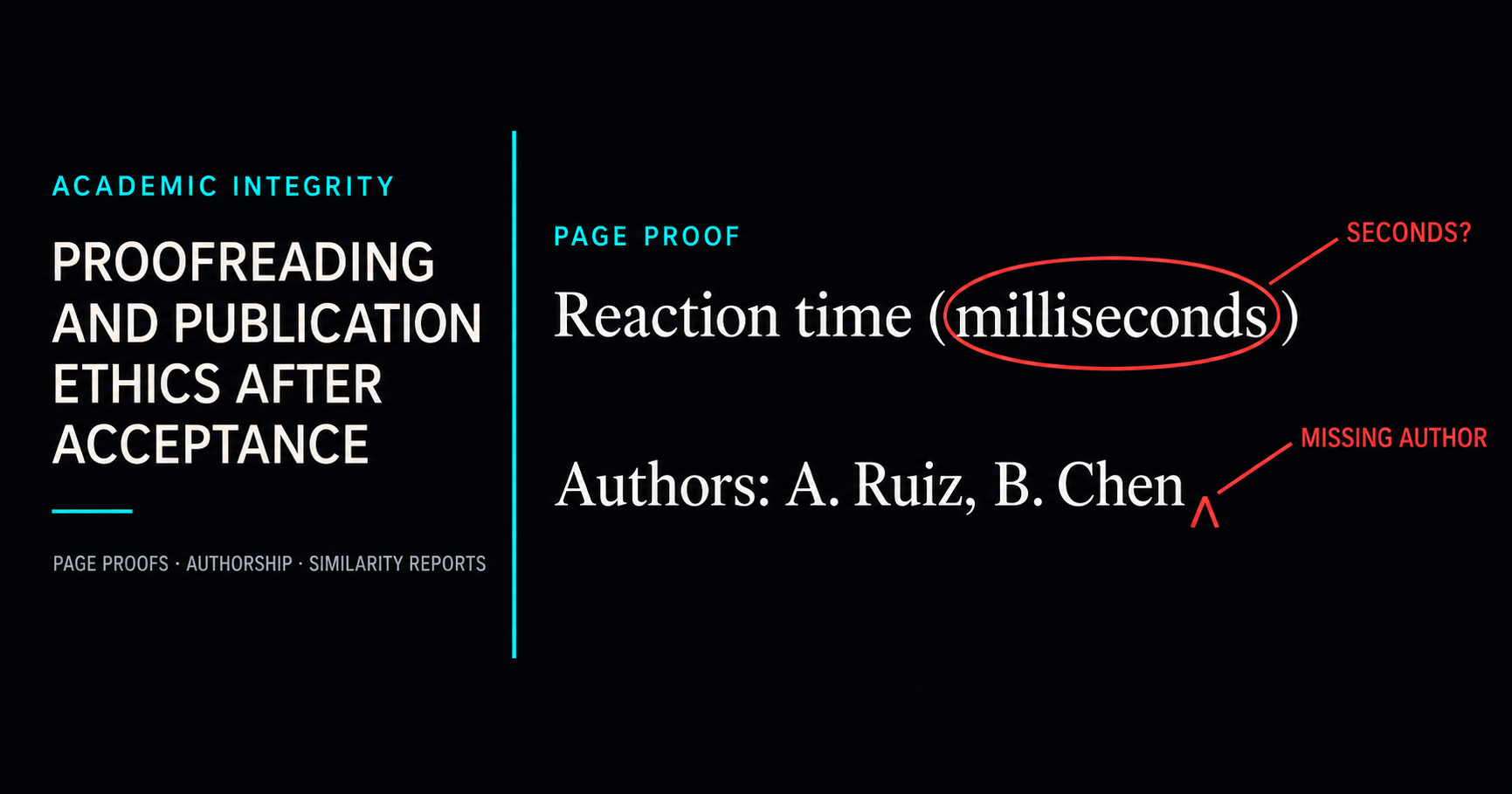
This scenario is hypothetical. Imagine a proof where a figure axis reads “milliseconds” but the study recorded seconds. That is a correction the author can mark, with a short explanation. If the authors then realise the underlying analysis also used the wrong unit, the issue has moved beyond typesetting. Tell the editor immediately and let them decide how to proceed.
How Should You Answer Copyeditor Queries?
Respond to every query, even obvious ones. Say plainly whether you accept the suggestion, reject it, or propose alternative wording. If a query reveals a scientific problem, such as an inconsistent denominator, flag it as one. Avoid vague instructions like “fix throughout” when you can point to exact locations.
What Counts as Plagiarism, Text Recycling and Similarity?
Plagiarism in academic publishing is the use of another person’s words, ideas, data or images without adequate acknowledgement. Related problems include close paraphrasing assembled from source phrasing, redundant publication, and the reuse of one’s own earlier text without transparency. COPE’s guidelines for editors treat text recycling as distinct from plagiarism of another author’s work and from duplicate publication, and they ask editors to assess each case on its facts, including the amount and location of overlap (COPE, n.d.-a).
Does a High Similarity Score Prove Plagiarism?
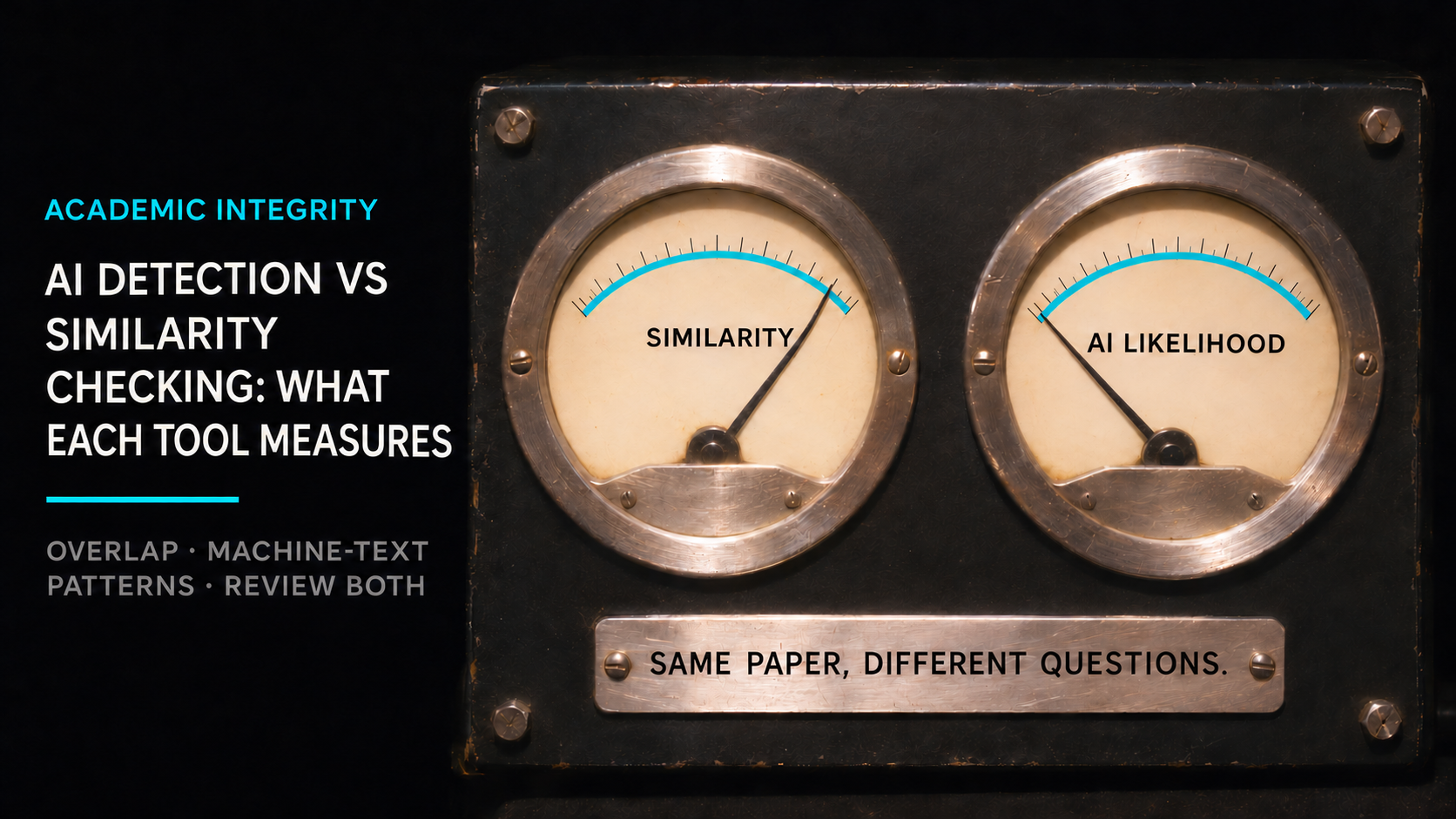
No. A similarity check compares a manuscript with an indexed corpus and highlights matching text. Such tools flag overlap, and they do not establish misconduct. Quoted passages, reference lists, standard method descriptions and legitimately reused material can all raise a score, while a low overall score can hide one unattributed paragraph that carries a central argument. Editors therefore look at where matches fall, how extensive they are, and whether sources are cited.
Before you approve proofs, run your own check and read every highlighted passage. The SciCampus Similarity checker is free to start, with no card required, and our comparison of SciCampus and legacy similarity checkers explains what such reports can and cannot tell you.
What If the Overlap Comes From Your Own Thesis?
This scenario is hypothetical. Suppose a doctoral candidate’s accepted article shows a high similarity score because most of the overlap comes from the candidate’s own repository thesis. The editor’s questions are likely to be whether the thesis is disclosed, whether the journal permits prior thesis publication, and whether the article adds new analysis or interpretation. A short, honest note to the editor explaining the relationship usually serves authors better than silence.
Can You Reuse Your Own Work?
Reuse is not automatically misconduct. A 2026 editorial in Conservation Physiology describes text recycling as a widespread but underrecognized issue in academic publishing, notes that some overlap is legitimate while excessive reuse can lead to manuscripts being returned, and offers practical advice for authors (O’Boyle et al., 2026). That is one journal’s editorial rather than a universal rule, so combine it with COPE’s case-based approach and the target journal’s own policy. If in doubt, disclose the earlier version, cite it as the journal directs, and ask the editor.
Do You Need Permission for Third-Party Figures?
A citation credits a source, but it does not grant permission to reproduce. For figures, tables, photographs or extended text from another rightsholder, check the licence and obtain written permission if one is needed. Keep a record and use the credit line the rightsholder specifies.
How Do Authorship Ethics Work After Acceptance?
What Are the ICMJE Criteria and CRediT?
ICMJE’s authorship criteria ask that an author make a substantial contribution to the work, take part in drafting or revising it, approve the final version, and agree to be accountable for it (ICMJE, n.d.). The Recommendations were updated in January 2026. Authors outside medicine should consult their own disciplinary norms.
The Contributor Roles Taxonomy (CRediT) describes contributions through 14 roles, including data curation, formal analysis, software and supervision (NISO, n.d.). It describes what people did and does not by itself decide who qualifies as an author.
What Is the Difference Between Gift, Guest and Ghost Authorship?
Gift (honorary)
What happens: A name is added as a courtesy, often because of seniority or supervision.
Typical cause: Hierarchy and habit.
Ethical harm: Accountability falls on someone who may not know the work well enough to defend it.
Usual remedy: Remove the name, or move it to the acknowledgements with the person’s consent.
Guest
What happens: A name is added chiefly for prestige.
Typical cause: A calculated attempt to lend credibility.
Ethical harm: Same as gift, plus misleading readers about who stands behind the work.
Usual remedy: Same as gift.
Ghost
What happens: A contributor who should be named is omitted.
Typical cause: Often hides a contribution, sometimes along with a funding or commercial relationship.
Ethical harm: Readers lose information about who shaped the findings and under what influences.
Usual remedy: Judge whether the omitted person met the authorship criteria; if not, disclose the assistance.
Institutions typically become involved when contributors disagree.
Evidence suggests these problems are not rare in some settings, though prevalence varies with field and method. Wislar et al. (2011) surveyed corresponding authors of 2008 articles in six high-impact medical journals, with 630 responses from 896 authors. They found evidence of honorary or ghost authorship, or both, in about 21% of responding articles, down from about 29% in 1996. The findings are self-reported and may not generalise beyond the journals and discipline studied.
How Do You Change Authors After Acceptance?
Do not alter the proof byline informally. Write to the editor, explain the reason for the change, provide an updated contribution statement, and secure written agreement from every author affected, including anyone added or removed. COPE publishes flowcharts for requests to add or remove authors, both before and after publication (COPE, n.d.-c). Journals that publish a change after publication often do so through a formal correction, but practice varies, so follow the target journal’s policy.
This scenario is hypothetical. During proof approval, a postdoctoral analyst realises that a colleague who built the statistical pipeline appears nowhere in the author list or acknowledgements. The corresponding author should pause approval, discuss the contribution against the journal’s authorship criteria, and contact the editor with the proposed change and everyone’s written consent. Fixing this quietly at the proof stage is far preferable to a later dispute. Our manuscript integrity SOP for multi-author labs shows how to record contributions from the start.
What Are the Corresponding Author’s Responsibilities?
The corresponding author coordinates the journal’s questions, proof corrections and administrative forms. They do not own the paper. We recommend circulating the final proof to all authors and keeping their approvals on record.
How Should You Handle Generative AI, Paper Mills and AI Detectors?
COPE’s position is that AI tools cannot be listed as authors, because they cannot take responsibility for submitted work, assert conflicts of interest, or manage copyright and licence agreements. COPE also says authors who use AI in writing, images or data analysis should disclose in the methods or a similar section how and which tool was used, and that authors remain fully responsible for the content (COPE, n.d.-b).
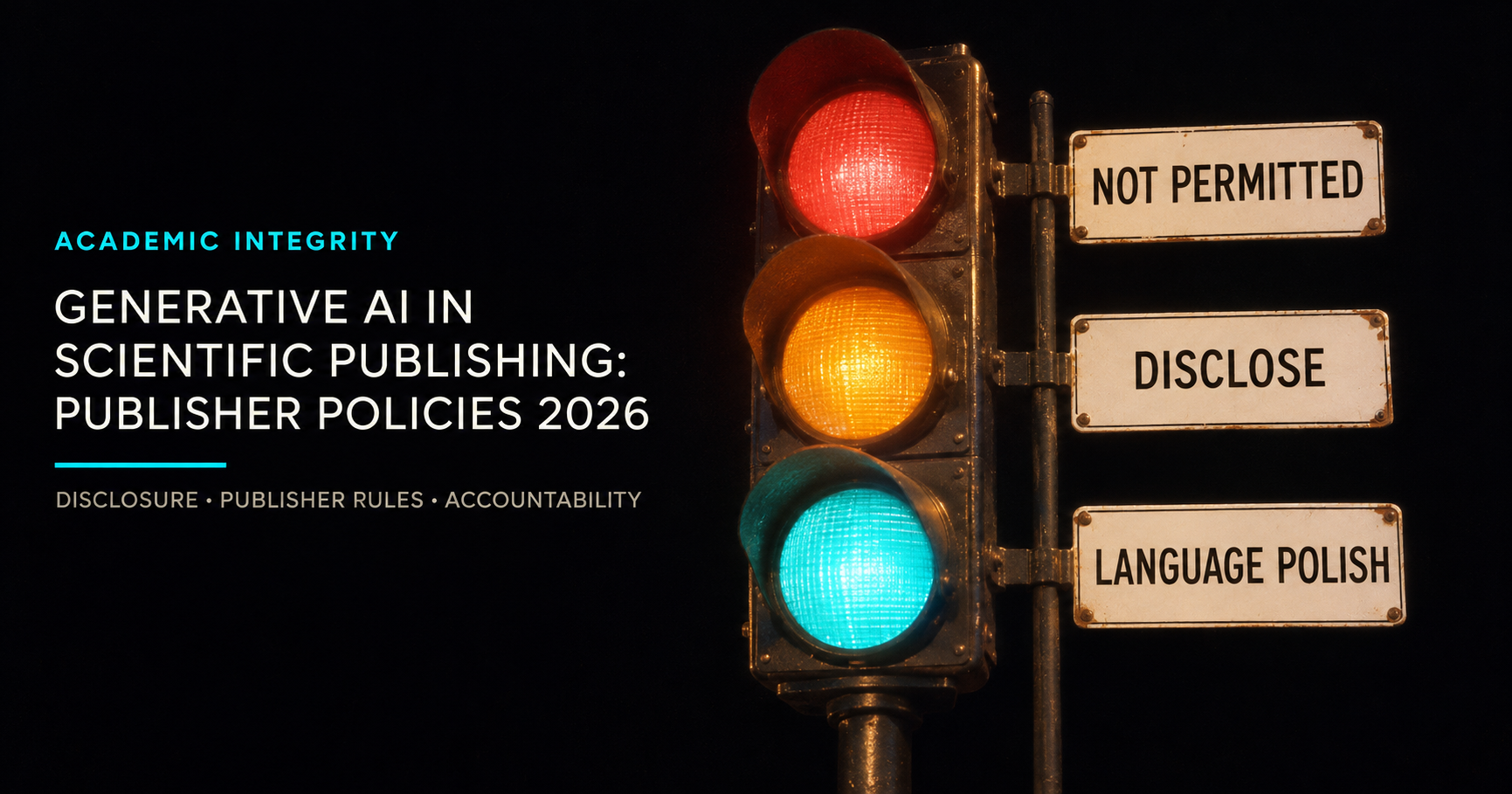
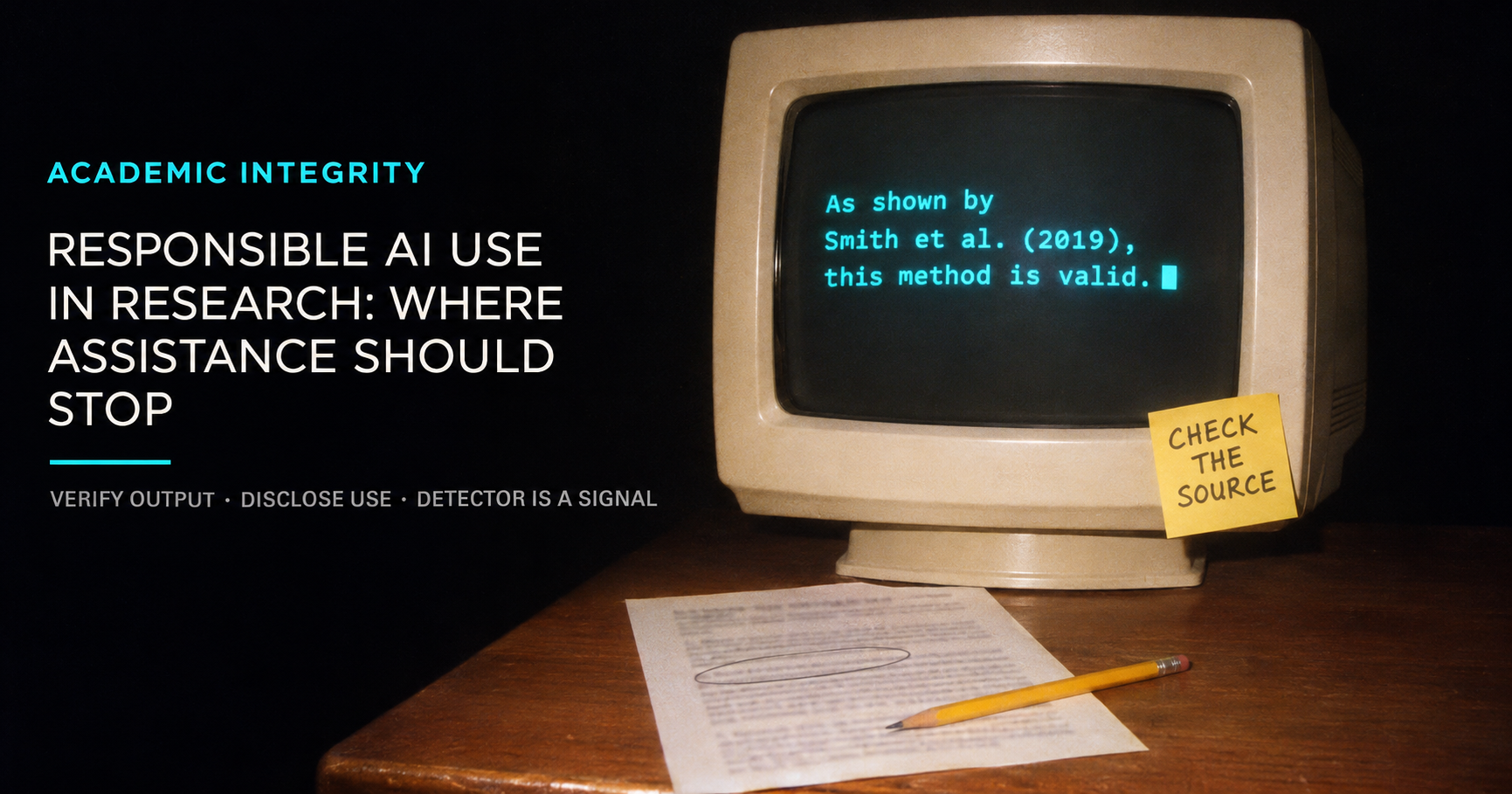
ICMJE’s January 2026 Recommendations gave AI use its own section: authors should disclose AI use at submission and describe how the tool was used, AI tools cannot be listed as authors, and authors remain accountable for AI-assisted content (ICMJE, n.d.; CASRAI, 2026). We recommend describing how each tool was used, and naming the tool where the journal requires it. Check the journal’s own policy because publisher rules differ. If you used a style tool such as the SciCampus AI Humanizer on your own draft, treat it like any other writing assistance: disclose it where the journal asks, and re-check every claim and citation yourself. Our guides to AI academic writing ethics and the 2026 journal AI policy traceability standard go deeper.
Two related threats deserve a mention. Paper mills sell fabricated or manipulated manuscripts; COPE and STM have published joint research on the problem (COPE & STM, 2022). “Tortured phrases” are awkward paraphrases of established terms that may signal automated text spinning (Cabanac et al., 2021).
AI-text detectors raise a different issue. Their reliability is contested: Liang et al. (2023) found that several GPT detectors misclassified writing by non-native English speakers as AI-generated, so editors should not treat a detector score as proof of authorship or misconduct. The same caution applies to any single automated score. If you need to check your own text, read why aggregate AI scores fail, and use a sentence-level tool such as the SciCampus AI Detector as one signal among several. For an accusation you believe is wrong, see our guide to false positives and sentence-level stylometry.
What Discipline-Specific Points Should You Know?
Medicine leans on the ICMJE model, which is why its authorship criteria and disclosure language appear so often in medical journal guidance.
Engineering and computer science often involve conference papers extended into journal articles, so disclose the earlier version and explain what is new, following the target journal’s policy.
Humanities authors should recheck quotations, diacritics and archival permissions in proofs, because production systems can corrupt special characters and permission conditions often differ between archives.
What Is the Final Pre-Publication Checklist?
Proof content and data integrity
Reconcile every reported value across the text, tables, figures and any supplementary files.
Keep the marked proof and a brief note on each substantive correction.
Have a second author confirm any numerical changes.
Authorship, contributions and identifiers
All authors confirm names, order, affiliations and contribution statements, ideally using CRediT roles where the journal supports them.
Keep the written approvals.
Validate ORCID iDs, DOIs, trial registrations and repository identifiers by clicking through them.
Funding, interests, ethics and AI disclosure
Recheck funder names, grant numbers, competing interests, ethics approvals, consent statements and writing assistance.
Make the AI statement match what was done, naming the tool where required.
Retain approval letters and consent documentation, and have the corresponding author confirm with each co-author.
Rights, licensing and open access
Read the publication agreement before signing, and confirm the licence, any article processing charge, and whether your funder or institution requires a specific route.
Keep copies of signed forms and of every permission for reproduced material.
The corresponding author usually signs, but authors should check funder conditions together.
Data, code, preprints and public communication
Test every repository link and licence, and make sure the availability statement is accurate.
Where the journal allows it, link the preprint to the final article and disclose related theses or conference papers.
Coordinate any press release with the journal’s embargo rules.
Archiving and final sign-off
Check which manuscript version may be deposited and when.
Have two authors inspect the corrected proof independently, one for content and one for metadata, and record the approval date.
Run a last pass with the 10-minute pre-submission audit.
What If an Error Appears After Publication?
Write to the journal with the article title, DOI, error location, evidence, and your view of whether conclusions are affected. The editor decides whether a correction, expression of concern or retraction is warranted.
Frequently Asked Questions
What should authors check in page proofs?
Check text, numbers, units, equations, figures, tables, references, names, affiliations, funding, disclosures and identifiers against the accepted manuscript and source data. Keep changes to errors, and ask the editor before altering results or conclusions. Journals differ in what they allow, so follow the instructions that accompany the proof.
Does a high similarity score prove plagiarism?
No. A similarity score reports matching text, which may include quotations, references, standard methods or properly disclosed prior work. Editors review the matched passages, their location and extent, and whether sources are acknowledged. COPE’s text-recycling guidelines ask for case-by-case assessment rather than a fixed threshold (COPE, n.d.-a).
Can I reuse text from my thesis or preprint?
Often, with transparency. Disclose the earlier version, cite it as the journal directs, and explain what is new. A 2026 editorial in Conservation Physiology discusses why limits on reuse matter, but policies vary, so confirm with the target journal before submitting (O’Boyle et al., 2026).
How common are honorary and ghost authorship?
It depends on field and method. A 2008 survey of six high-impact medical journals, with 630 responses from 896 corresponding authors, found evidence of honorary or ghost authorship in about 21% of responding articles. The authors cautioned against generalising beyond that sample (Wislar et al., 2011).
Can AI be listed as an author?
No. COPE states that AI tools cannot be authors because they cannot take responsibility for the work, declare conflicts of interest or manage copyright agreements. Authors who use AI should disclose how and which tool was used and remain fully responsible for the content (COPE, n.d.-b).
Why do retractions happen?
Reasons vary. In one analysis of 2,047 biomedical and life-science retractions identified in 2012, 21.3% were attributed to error and 67.4% to misconduct or suspected misconduct. These proportions are historical and field-specific, not current rates for all research (Fang et al., 2012).
Related reading
Ethics and Policy Guidelines for Using AI in Academic Writing in 2026
Is It Safe to Upload an Unpublished Paper to an AI Detector?
References
Cabanac, G., Labbé, C., & Magazinov, A. (2021). Tortured phrases: A dubious writing style emerging in science. Evidence of critical issues affecting established journals. arXiv. https://arxiv.org/abs/2107.06751
CASRAI. (2026). ICMJE January 2026 recommendations update. https://www.casrai.org/news/icmje-january-2026-recommendations-update
Committee on Publication Ethics. (n.d.-a). Text recycling guidelines for editors. https://publicationethics.org/guidance/endorsed-guidance/text-recycling-guidelines-editors
Committee on Publication Ethics. (n.d.-b). Authorship and AI tools. https://publicationethics.org/guidance/cope-position/authorship-and-ai-tools
Committee on Publication Ethics. (n.d.-c). Flowcharts: Authorship. https://publicationethics.org/guidance
Committee on Publication Ethics, & STM. (2022). Paper mills: Research report from COPE & STM. https://publicationethics.org/resources/research/paper-mills-research
Crossref. (2023, September 12). News: Crossref and Retraction Watch. https://crossref.org/blog/news-crossref-and-retraction-watch
Fang, F. C., Steen, R. G., & Casadevall, A. (2012). Misconduct accounts for the majority of retracted scientific publications. Proceedings of the National Academy of Sciences, 109(42), 17028–17033. https://doi.org/10.1073/pnas.1212247109
International Committee of Medical Journal Editors. (n.d.). Recommendations for the conduct, reporting, editing, and publication of scholarly work in medical journals. https://www.icmje.org/recommendations/
Liang, W., Yuksekgonul, M., Mao, Y., Wu, E., & Zou, J. (2023). GPT detectors are biased against non-native English writers. Patterns, 4(7), 100779. https://doi.org/10.1016/j.patter.2023.100779
National Information Standards Organization. (n.d.). CRediT: Contributor Roles Taxonomy. https://credit.niso.org/
O’Boyle, B., Rodgers, E., Ruthsatz, K., & Fuller, A. (2026). Text recycling: Defining the boundaries of acceptable reuse [Editorial]. Conservation Physiology, 14(1), coag047. https://doi.org/10.1093/conphys/coag047
Wislar, J. S., Flanagin, A., Fontanarosa, P. B., & DeAngelis, C. D. (2011). Honorary and ghost authorship in high impact biomedical journals: A cross sectional survey. BMJ, 343, d6128. https://doi.org/10.1136/bmj.d6128