Short answer: responsible AI use in research means letting AI support your reasoning while you keep every decision that could change the scientific conclusion. Use it freely for low-stakes help such as grammar or search terms. Check every citation, method and line of code it gives you. Disclose AI use in proportion to what the AI actually contributed. Treat an AI-detector score as a signal to review, never as a verdict. The test is simple: can you independently verify and defend what the AI helped you produce?
Where does AI assistance end and delegation begin?
Researchers can use AI to search and organise literature, assist with code, improve scientific writing and explore possible study designs. These uses can reduce repetitive work. But using AI does not transfer responsibility for accuracy, transparency or methodological choices away from the researcher. Resnik and Hosseini (2025) argue that research needs new guidance for this tool precisely because of such questions.
Not every task carries the same intellectual weight:
Supportive use (lower stakes)Delegation (higher stakes)Fixing grammar or sentence structureInterpreting statistical resultsSuggesting search termsDeciding which studies to exclude from a reviewGenerating possible approachesAdopting a method without checking its assumptionsChallenging an argument you wroteChoosing a hypothesis or determining the conclusion
Scientific methods must fit the research question and the study's assumptions. AI may help you consider approaches, but its recommendations need independent evaluation before they enter your research.
Why can a confident AI answer still be wrong?
Generative AI can produce fluent, convincing text even when the information is incorrect. Farquhar and colleagues (2024) describe a subset of such errors as confabulations: arbitrary and incorrect generations, which they try to detect using uncertainty measured at the level of meaning rather than wording. For researchers the lesson is practical: a confident response is not evidence that the response is reliable.
Writing carries a second risk. Developing an argument helps you find weaknesses, connect evidence and test assumptions. It is reasonable to be cautious about handing too much of that process to a tool, because the thinking is part of the research. This is a cautionary view, not a measured finding.
What is the "semantic gap" in AI-assisted research?
An answer can look correct yet respond to a different question from the one you meant. The cause is often missing context: definitions, assumptions, units, experimental conditions or methodological constraints that were never in the prompt. The AI then answers its own interpretation. We call this mismatch the semantic gap. The answer need not be obviously false; it may be a valid method, equation or concept that simply does not fit your study.
A practical guide to using ChatGPT for literature review notes that language models lack specialised knowledge and have other limitations (Lee et al., 2025), which is why context and checking matter. For critical tasks, put the relevant conditions in the prompt and ask the model to state:
what assumptions its recommendation depends on,
what information may still be missing,
what alternative approaches exist,
and when the proposed approach would not be appropriate.
These questions do not make the AI responsible for the decision. They make its recommendation easier for you to evaluate.
How should you verify AI output?
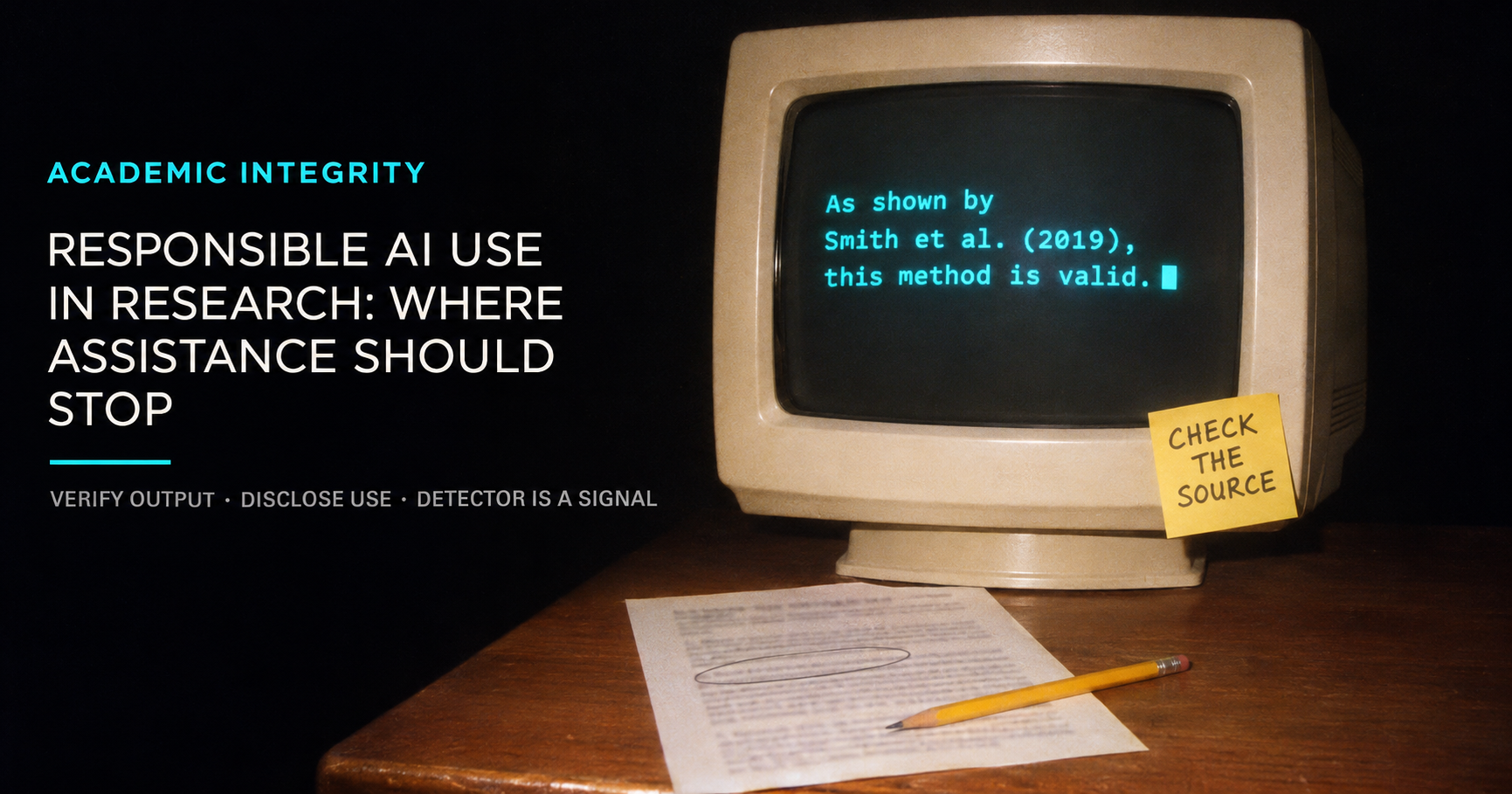
AI-generated information does not become evidence because it is presented clearly.
If AI gives you...Then...A citationFind and read the original sourceA methodVerify its assumptions against your dataCodeTest the code and its outputsA paper summaryCheck the relevant parts of the original before relying on it
Match the effort to the stakes. A grammar error is unlikely to change a study's outcome; an error in data analysis, model selection or interpretation can. Human expertise matters most at stages that directly affect validity.
How much should you disclose about AI use?
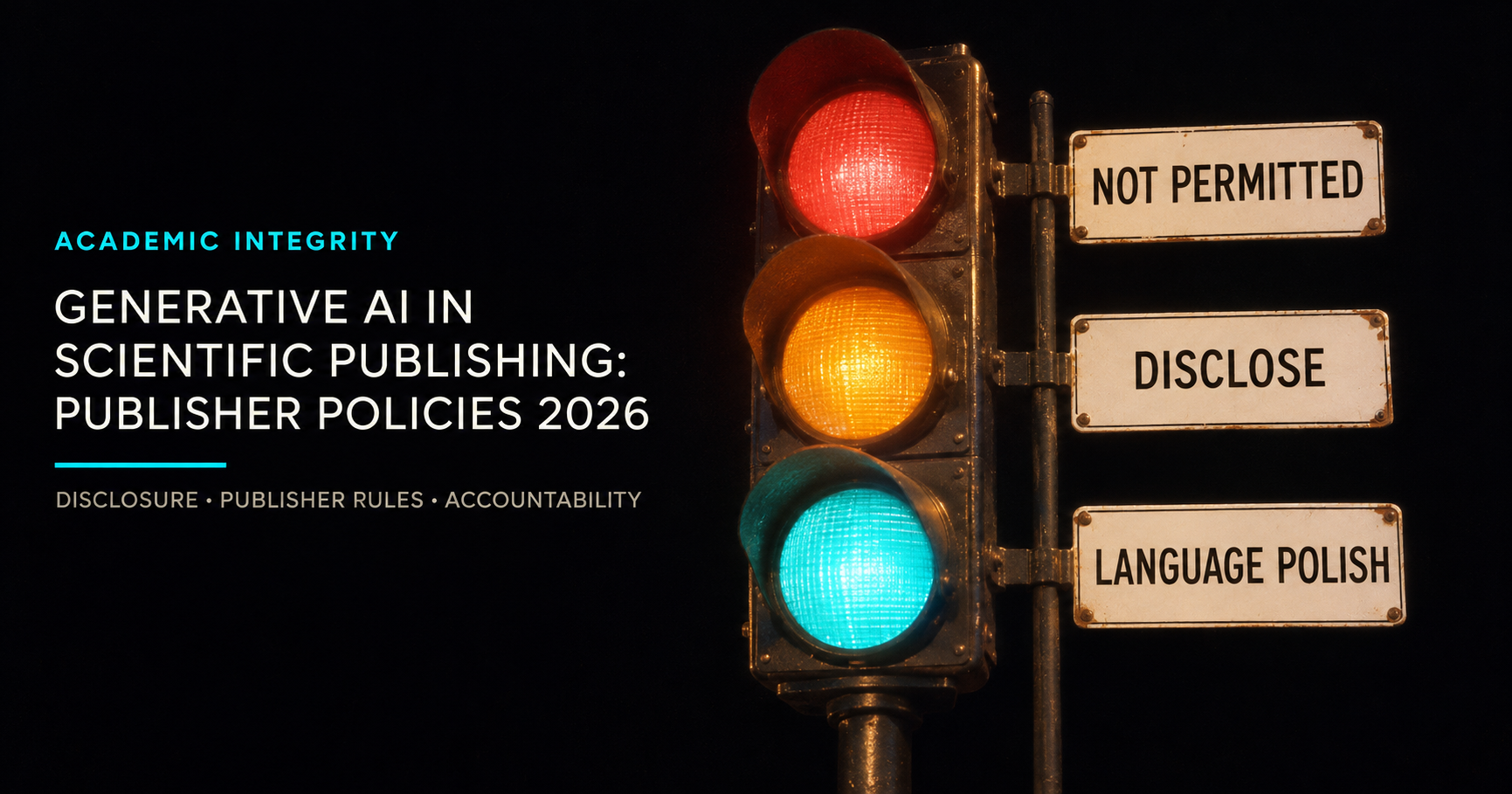
A general line saying "an AI tool was used" says little. Using AI for language editing differs from using it for literature synthesis, coding, analysis or drafting. Mehta and colleagues (2026) note that there is no cross-journal consensus on which uses are acceptable, and propose a reporting framework organised around conceptual contributions, linguistic assistance and research assistance, distinguishing generally acceptable uses from those that raise integrity concerns.
A sensible approach is proportionality. Minor language help may need little explanation. AI involvement in methodology, analysis, interpretation or substantial drafting deserves clearer documentation of what it contributed and how you reviewed it. Always follow your target journal's policy; see our guides to AI writing ethics and journal AI policies and traceability. The National Academies' On Being a Scientist, fourth edition (2026), also lists AI among emerging technologies raising new ethical issues for areas such as data management, authorship, peer review and publication.
Can an AI detector prove that text was written by AI?
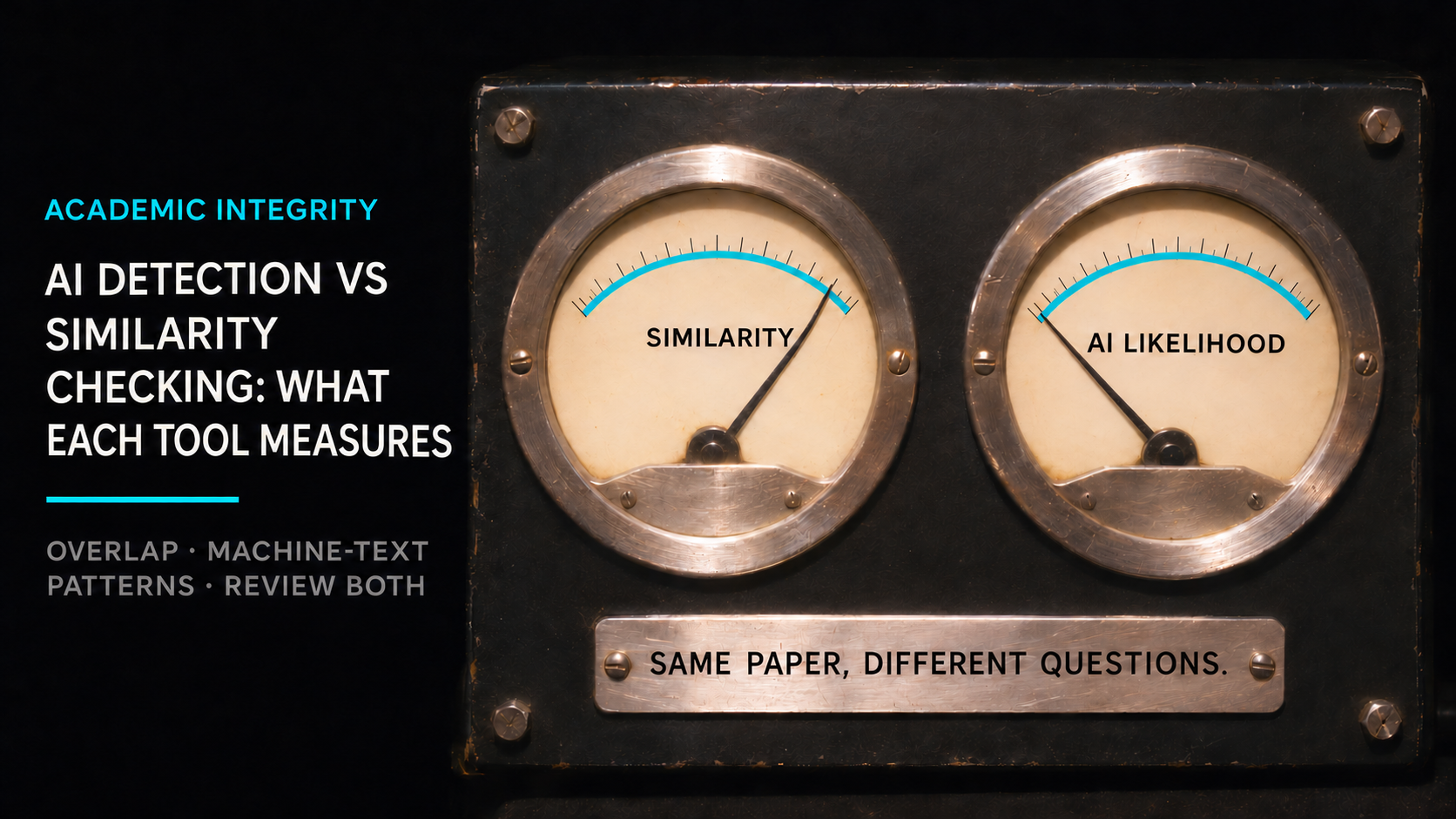
No. Detectors can give useful information, but their results should not be treated as proof of authorship. Liang and colleagues (2023) tested seven widely used GPT detectors and found that, on average, 61.22% of 91 human-written TOEFL essays by non-native English writers were flagged as AI-generated, while the same detectors were nearly accurate on US eighth-grade essays. They caution against using such detectors in evaluative settings, especially for non-native speakers. That study evaluated detectors available in 2023, so it shows a risk to guard against, not the performance of any current tool.
The SciCampus AI Detector classifies each sentence as human, AI-generated or AI-paraphrased with probabilities, gives a word-weighted document score and a downloadable report, and states that its results are estimates, not proof. Used before submission, it can help you review sections where you used AI assistance, confirm that the final text reflects your own reasoning and prepare for journal requirements. It cannot decide authorship. For more, see why aggregate AI scores fail, how false positives arise, and how to defend a manuscript against a false AI flag.
Scientific integrity cannot be reduced to a detector score. You must be able to explain where the text came from, verify its claims and defend its reasoning.
Where should you draw the boundary?
A practical boundary follows scientific consequence: the more an AI-assisted decision can change the scientific conclusion, the stronger the need for independent human verification.
Would an error here change my conclusion? If yes, verify independently.
Do I understand the method or claim well enough to defend it without the AI?
Have I checked every citation, number and line of code the AI produced?
Can I describe what the AI contributed and how I reviewed it?
Does my target journal's AI policy allow this use, and have I disclosed it as required?
Responsible use does not mean avoiding AI. It means staying able to understand, check and defend the decisions AI helps you make. The central question is not "Was AI used?" but "Can the researcher independently verify and defend the scientific decisions that AI helped to produce?" If that ability remains intact, AI can strengthen research. If it disappears, efficiency may rise while scientific judgment weakens.
Related reading
Ethics and Policy Guidelines for Using AI in Academic Writing in 2026
Is It Safe to Upload an Unpublished Paper to an AI Detector?
References
Farquhar, S., Kossen, J., Kuhn, L. & Gal, Y. (2024). Detecting hallucinations in large language models using semantic entropy. Nature, 630, 625–630. doi:10.1038/s41586-024-07421-0
Lee, Y., Oh, J. H., Lee, D., Kang, M. & Lee, S. (2025). Prompt engineering in ChatGPT for literature review: practical guide exemplified with studies on white phosphors. Scientific Reports, 15, 15310. doi:10.1038/s41598-025-99423-9
Liang, W., Yuksekgonul, M., Mao, Y., Wu, E. & Zou, J. (2023). GPT detectors are biased against non-native English writers. Patterns, 4(7), 100779. arXiv:2304.02819
Mehta, N. et al. (2026). A call for clarity: a unified checklist for reporting use of large language models in writing scientific manuscripts. Research Integrity and Peer Review. doi:10.1186/s41073-026-00212-3
National Academies of Sciences, Engineering, and Medicine (2026). On Being a Scientist: A Guide to the Responsible and Ethical Conduct of Research (4th ed.). National Academies Press. nap.nationalacademies.org
Resnik, D. B. & Hosseini, M. (2025). The ethics of using artificial intelligence in scientific research: new guidance needed for a new tool. AI and Ethics, 5, 1499–1521. doi:10.1007/s43681-024-00493-8